How to Do a Barbell Back Squat
Heavy compound squat for max leg strength.
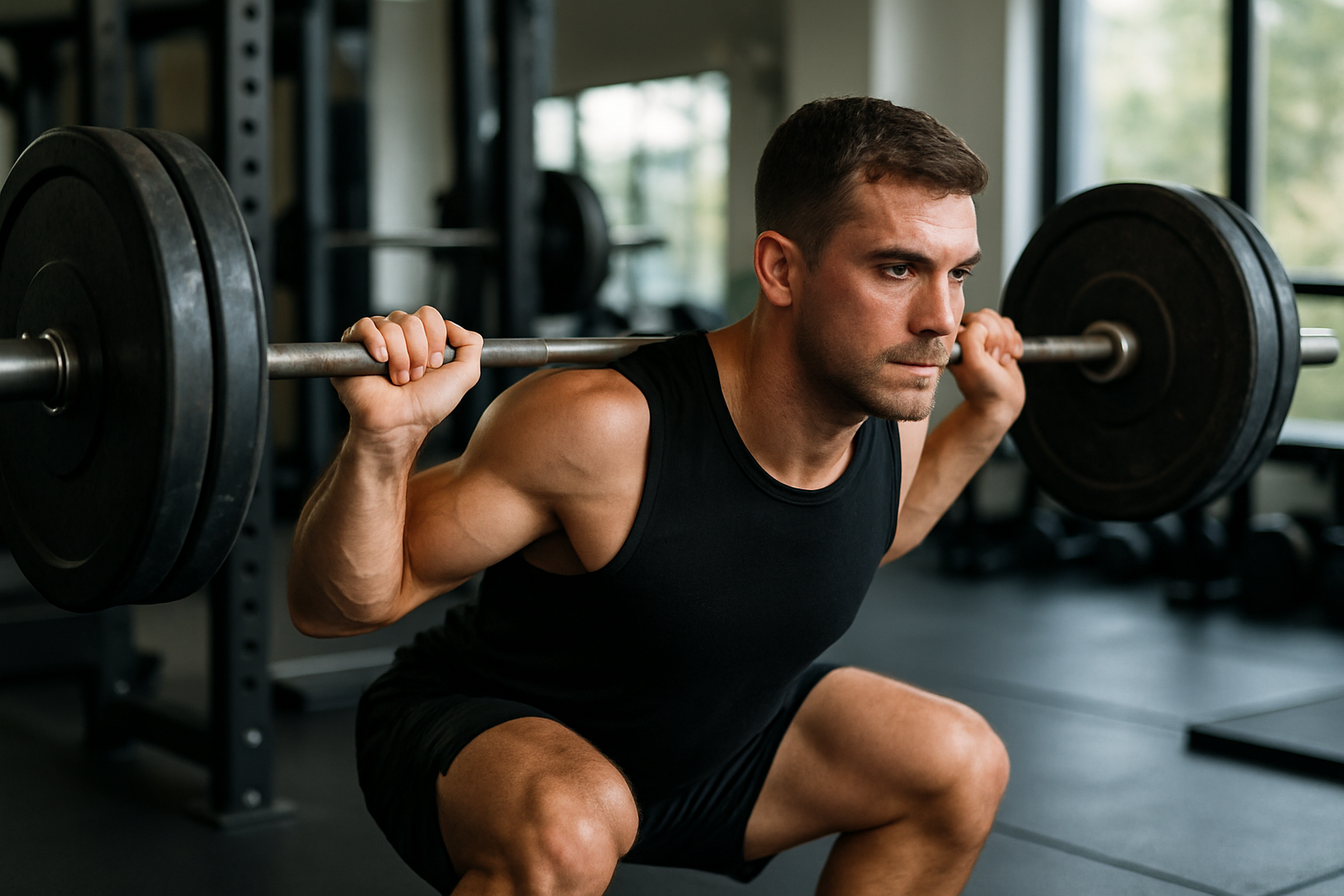
To perform a Barbell Back Squat, position the barbell on your upper traps, engage your core, squat down until your thighs are at least parallel to the ground, and drive back up through your midfoot. Maintain a stable posture throughout the movement for optimal strength gains.
Related: Goblet Squat
How to Do It
- Set Up the Barbell: Approach the barbell and position it on a squat rack at about chest height. Step under the bar so it rests on your upper traps, just below the base of your neck.
- Grip the Bar: Use a grip slightly wider than shoulder-width. Keep your elbows pointed down and back to create a stable upper body position.
- Stand Up: Lift the bar off the squat rack by standing up straight, making sure to keep your core engaged. Step back a few paces to clear the rack.
- Feet Position: Position your feet shoulder-width apart with toes slightly pointed out. This stance will help maintain balance during the squat.
- Brace Your Core: Inhale deeply, filling your abdomen with air to create intra-abdominal pressure. This will help stabilize your spine during the squat.
- Initiate the Squat: Begin the descent by pushing your hips back and bending your knees simultaneously. Keep your chest up and your back straight.
- Squat Down: Lower your body until your thighs are at least parallel to the ground. Ensure your knees track over your toes and do not cave inward.
- Drive Up: Press through your midfoot and heels to stand back up, extending your hips and knees simultaneously. Exhale at the top of the movement.
- Repeat: Perform the desired number of repetitions (typically 5-8 reps for 4 sets).
Muscles Worked
The Barbell Back Squat primarily targets the quadriceps, but it also engages the glutes, hamstrings, calves, and lower back. This compound movement promotes overall lower-body strength and stability, making it a foundational exercise for building leg muscles.
Common Mistakes
- Mistake: Knees Caving In Fix: Focus on pushing your knees outward during the squat. Strengthen your hip abductors to improve knee tracking.
- Mistake: Leaning Forward Too Much Fix: Keep your chest up and maintain a neutral spine. Focus on pushing your hips back rather than bending at the waist.
- Mistake: Not Squatting Deep Enough Fix: Aim to squat to at least parallel. Work on flexibility in your hips and ankles if you have trouble achieving depth.
Variations and Progressions
- Beginner: Goblet Squat - Use a dumbbell or kettlebell held at chest level to learn proper squat form without the need for a barbell.
- Intermediate: Front Squat - Shift the barbell to the front of your shoulders. This variation emphasizes the quads and requires a more upright torso.
- Advanced: Pause Squat - At the bottom of the squat, pause for 2-3 seconds before driving back up. This increases time under tension and builds strength.
When to Avoid It / See a Clinician
If you experience pain in your knees, hips, or lower back during or after squatting, it's crucial to stop and consult a clinician. Additionally, if you have a known injury or condition affecting your lower body, seek professional guidance before attempting this exercise. LegLike's programming can help you with a safe return to strength training once cleared by a healthcare provider.
For tailored programming and further guidance, consider using LegLike, the app that supports your lower-body training and rehab needs.
Related: Bodyweight Squat
Sets, Reps, and Tempo Guidance
As a beginner, aim for 4 sets of 5-8 reps. Use a controlled tempo of 2 seconds down and 1 second up to focus on form and stability.
FAQ
{
Want this exercise programmed into a full plan for you? Try LegLike — AI-guided lower-body workouts, mobility assessment and rehab plans.
Program this exercise into a full plan
Personalized lower-body strength, mobility and rehab plans, powered by AI. Free to start.
Get Started Free