How to Do a Bodyweight Squat
Foundational squat pattern for leg strength.
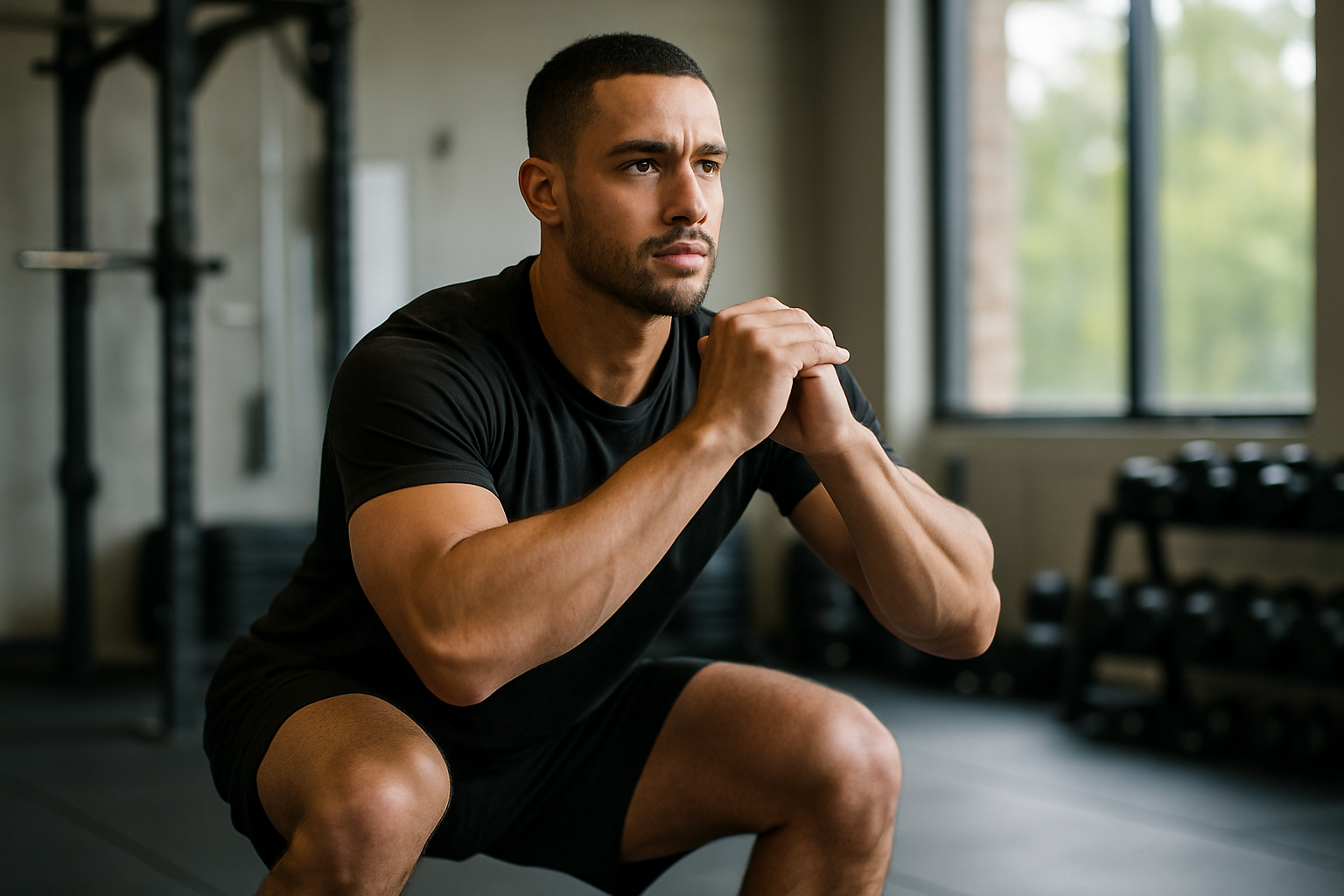
To perform a Bodyweight Squat, start with your feet shoulder-width apart. Sit your hips back and down as if you’re about to sit in a chair, keeping your chest tall and your back straight. Drive through your heels to stand back up, ensuring your knees do not extend past your toes throughout the movement.
How to Do It
- Start Position: Stand tall with your feet shoulder-width apart, toes slightly pointed out.
- Hips Back: Begin the movement by sitting your hips back as if lowering into a chair. Your knees should bend, but ensure they stay behind your toes.
- Chest Up: Keep your chest lifted and your back straight throughout the squat to maintain proper posture.
- Lower Down: Continue lowering your body until your thighs are parallel to the ground or as low as your mobility allows.
- Drive Through Heels: Push through your heels to stand back up, straightening your legs and returning to the starting position.
- Repeat: Perform 12-15 repetitions for 3 sets, resting as needed between sets.
Muscles Worked
The Bodyweight Squat primarily targets the quadriceps, glutes, hamstrings, and calves. It also engages core muscles to stabilize the body during the movement, making it an excellent foundational exercise for leg strength and overall stability.
Common Mistakes
- Knees Caving In: This occurs when your knees move inward during the squat. Fix: Focus on pushing your knees outward as you squat, ensuring they stay in line with your toes.
- Leaning Forward: A common mistake is leaning too far forward, which can strain the back. Fix: Keep your chest up and your back straight. Engage your core to support your spine.
- Not Going Low Enough: Some may not squat low enough to engage the muscles effectively. Fix: Aim to lower your thighs to at least parallel with the ground, adjusting based on your flexibility and comfort level.
Variations and Progressions
- Beginner: If you’re new to squats, you can perform the movement to a box or bench. Stand in front of a sturdy surface and lower yourself until you touch it lightly, then stand back up.
- Intermediate: Add a pause at the bottom of your squat for 2-3 seconds before standing up. This increases time under tension and enhances strength.
- Advanced: Try single-leg squats or pistol squats, which require more balance and strength. Start by performing them assisted, using a wall or chair for support until you build confidence.
When to Avoid It / See a Clinician
If you experience pain in your knees, hips, or lower back while performing Bodyweight Squats, it’s essential to stop and assess your form. Persistent pain may indicate an underlying issue that requires professional evaluation. LegLike recommends consulting a clinician for any injuries or conditions that do not improve with self-guided programs.
For more exercises and personalized guidance, check out LegLike, where you can find tailored workout plans to suit your needs.
Frequently asked questions
What are the benefits of Bodyweight Squats?+
Bodyweight Squats improve leg strength, enhance mobility, and engage your core. They are a foundational exercise that can help with overall fitness and functional movement.
How often should I do Bodyweight Squats?+
For beginners, aim for 2-3 times per week, allowing for rest days between sessions to promote recovery. As you build strength, you can increase the frequency.
Can I do Bodyweight Squats if I have knee pain?+
If you experience knee pain during Bodyweight Squats, it's crucial to assess your form and range of motion. If pain persists, consult a clinician before continuing.
How can LegLike help me with my workout plans?+
LegLike offers personalized AI-generated workout plans, progress tracking, and rehabilitation programs tailored to your needs, especially for lower-body training.
Program this exercise into a full plan
Personalized lower-body strength, mobility and rehab plans, powered by AI. Free to start.
Get Started Free