How to Do a World's Greatest Stretch
Full-body mobility flow for hips and thoracic spine.
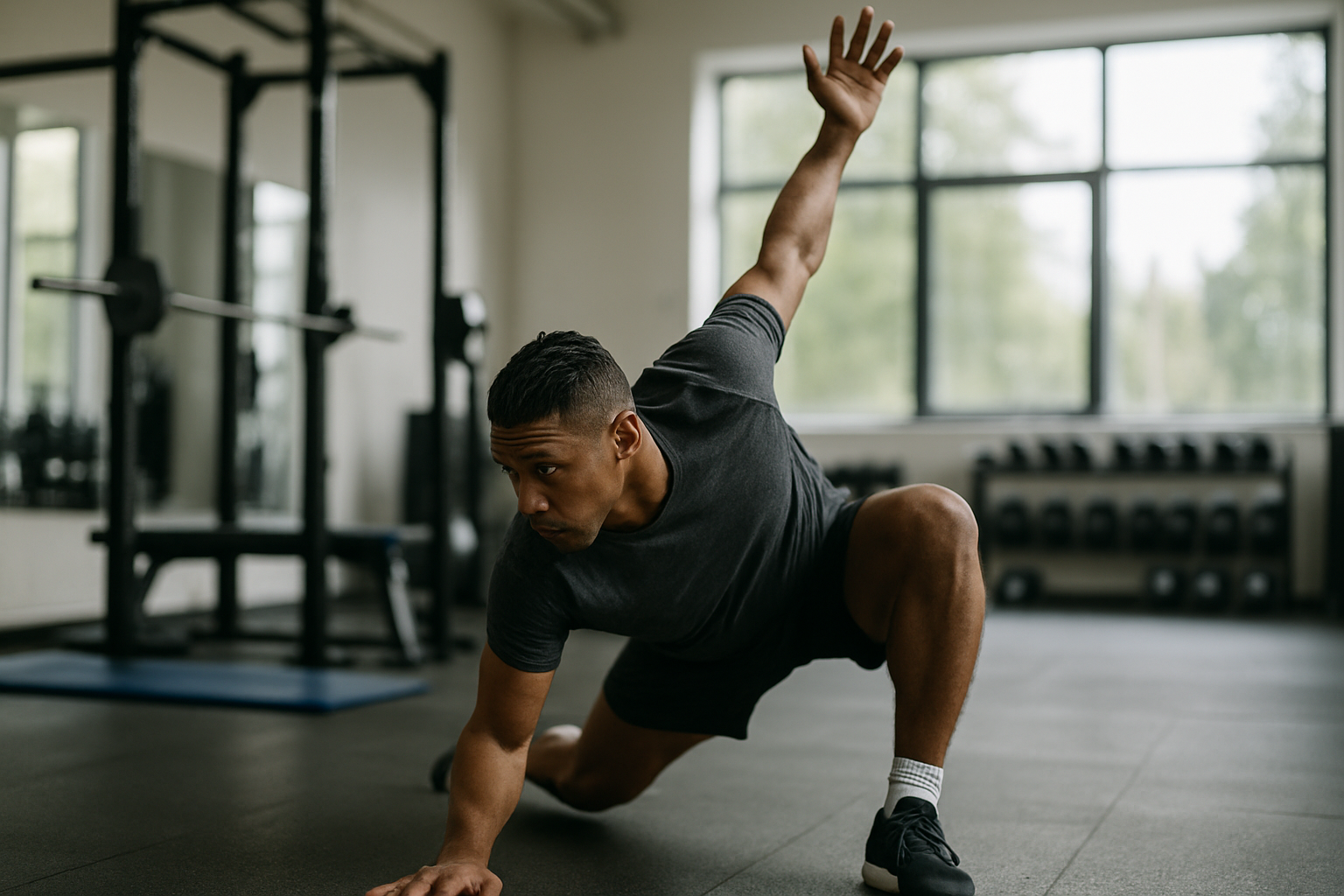
The World's Greatest Stretch is a dynamic mobility exercise that targets the hips and thoracic spine, enhancing flexibility and overall movement quality. To perform it, lunge forward with one leg, drop your back hand to the floor, and rotate your opposite arm toward the ceiling. This exercise is ideal for beginners and requires no equipment.
How to Do It
- Start Position: Stand tall with your feet hip-width apart.
- Lunge Forward: Step your right foot forward into a lunge, bending your right knee at a 90-degree angle. Your left leg should be extended behind you.
- Hand Placement: Lower your left hand to the ground next to your right foot, keeping your right foot flat on the floor.
- Rotate Torso: Inhale and rotate your torso to the right, lifting your right arm toward the ceiling. Look up at your right hand as you do this.
- Hold Position: Maintain this position for a moment, feeling the stretch in your hips and spine.
- Return to Start: Exhale and return your right hand to the floor, stepping back to the start position.
- Repeat on Other Side: Perform the stretch on the left side by stepping your left foot forward and following the same steps.
- Sets and Reps: Aim for 2 sets of 6 repetitions on each side. Perform the movement slowly to maximize the stretch and control.
Muscles Worked
The World's Greatest Stretch primarily engages:
- Hip Flexors: Stretching and loosening the hip flexors enhances flexibility and mobility.
- Glutes: Activating the gluteal muscles supports hip stability.
- Thoracic Spine: Rotation increases mobility in the upper back, improving posture.
- Quadriceps and Hamstrings: These muscles are dynamic during the movement, promoting balanced strength.
Common Mistakes
-
Mistake: Not lowering the back hand to the ground.
Fix: Ensure your back hand reaches down toward the ground to maximize the stretch in your hips and spine. -
Mistake: Twisting too quickly or without control.
Fix: Rotate the torso slowly and deliberately, focusing on form rather than speed to avoid straining the back.
Related: 90/90 Hip Switch
- Mistake: Allowing the front knee to extend past the toes.
Fix: Keep your front knee aligned above your ankle to protect your joints during the lunge.
Variations/Progressions
- Beginner Variation: Perform the stretch with a wider stance for stability, or keep your back knee on the ground to reduce intensity.
- Intermediate Variation: Gradually increase the depth of your lunge while keeping your form correct, enhancing the stretch further.
- Advanced Progression: Incorporate a twist by adding a side reach with the arm opposite to the lunging leg, increasing the thoracic rotation challenge.
When to Avoid It / See a Clinician
If you experience any sharp pain or discomfort in your hips, knees, or back while performing the World's Greatest Stretch, it's crucial to stop and consult a clinician. This exercise may not be suitable for individuals with severe injuries or conditions affecting the lower body. LegLike encourages users to seek professional advice for any persistent issues rather than relying solely on self-guided plans.
Using LegLike, you can track your mobility assessments and integrate exercises like the World's Greatest Stretch into your personalized lower-body routine. With the right approach, this stretch can be a valuable addition to your mobility training.
Want this exercise programmed into a full plan for you? Try LegLike — AI-guided lower-body workouts, mobility assessment and rehab plans.
Frequently asked questions
What is the World's Greatest Stretch good for?+
The World's Greatest Stretch is designed to improve mobility in the hips and thoracic spine, making it beneficial for flexibility, posture, and overall movement quality.
Can I do the World's Greatest Stretch every day?+
Yes, as a mobility exercise, the World's Greatest Stretch can be performed daily. Just ensure you listen to your body and avoid overexertion.
Is this stretch suitable for beginners?+
Absolutely! The World's Greatest Stretch is classified as a beginner exercise, making it accessible for those new to mobility training.
What should I do if I feel pain while doing this stretch?+
If you experience pain during the stretch, it's important to stop immediately. Consult a clinician for guidance, especially if the pain persists.
Program this exercise into a full plan
Personalized lower-body strength, mobility and rehab plans, powered by AI. Free to start.
Get Started Free