How to Do a Single-Leg Glute Bridge
Unilateral glute bridge for symmetry.
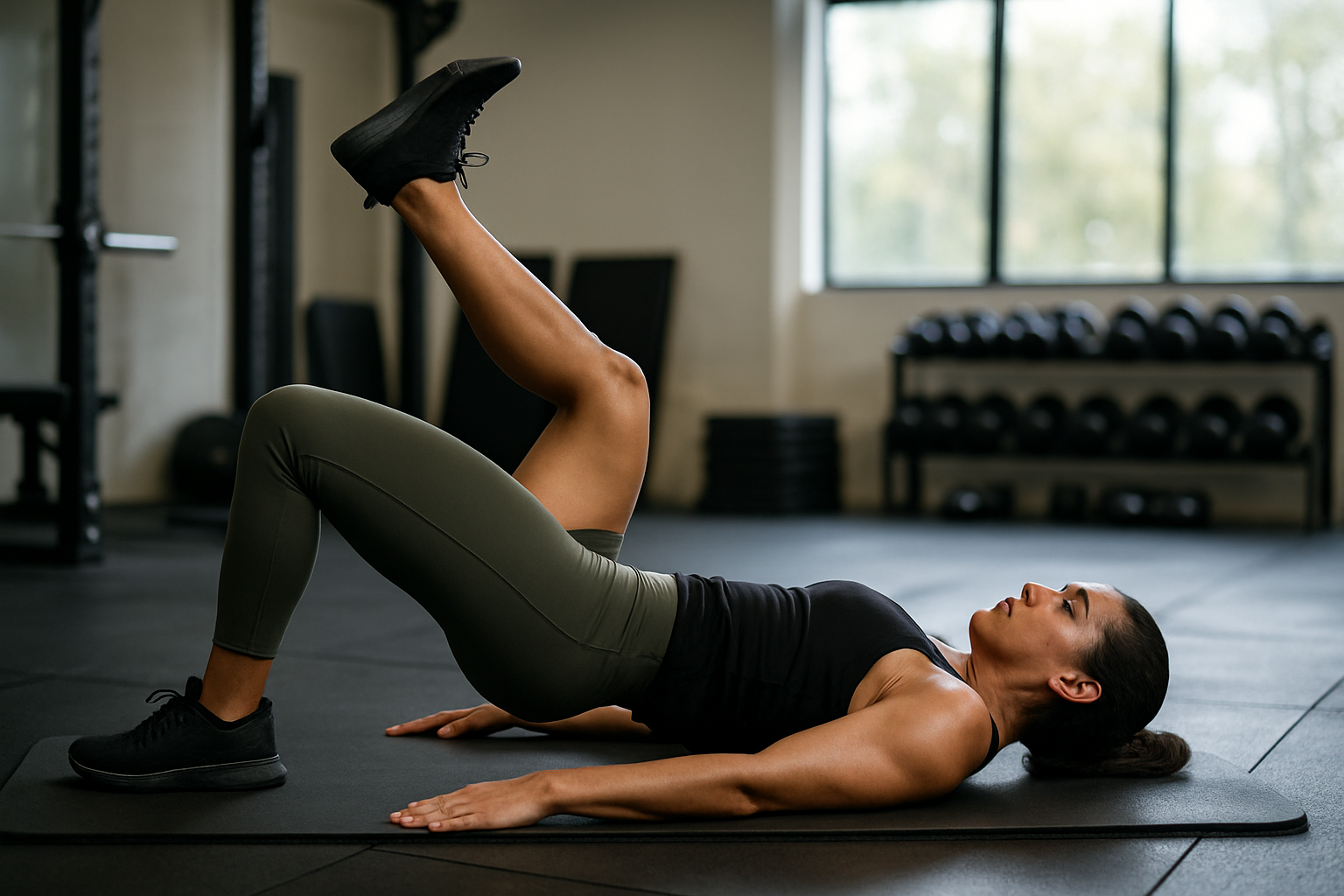
To perform a Single-Leg Glute Bridge, start by lying on your back with one foot planted firmly on the ground, and the other leg extended straight. Press through the heel of your planted foot to lift your hips off the ground, squeezing your glutes at the top of the movement. Lower your hips back down and repeat.
How to Do It
- Start Position: Lie on your back on a flat surface with your knees bent and feet flat on the ground. Keep your arms at your sides.
- Foot Placement: Bend your right knee and place your right foot flat on the floor. Extend your left leg straight out, keeping it parallel to the ground.
- Engage Your Core: Tighten your abdominal muscles to stabilize your pelvis.
- Lift Your Hips: Press through the heel of your right foot, driving your hips upward while keeping your left leg extended. Your body should form a straight line from your shoulders to your knees at the top.
- Squeeze: At the top of the movement, squeeze your glutes and hold for a moment.
- Lower Down: Slowly lower your hips back to the ground, returning to the starting position.
- Repeat: Perform 10 repetitions on one leg, then switch to the other leg. Aim for 3 sets total.
Muscles Worked
The Single-Leg Glute Bridge primarily targets the gluteus maximus, but it also activates several other muscles, including:
- Hamstrings
- Quadriceps
- Calves
- Core muscles (rectus abdominis and obliques) This exercise helps enhance glute strength, improve hip stability, and promote muscle symmetry between legs.
Common Mistakes
-
Mistake: Arching the Lower Back
Fix: Keep your core engaged and focus on using your glutes to lift your hips. Avoid overarching your lower back by drawing your belly button towards your spine. -
Mistake: Not Fully Extending the Non-Working Leg
Fix: Ensure the leg that is extended is straight and aligned with your body throughout the movement. This helps maintain balance and proper form.
Related: Glute Bridge
- Mistake: Lifting Too High
Fix: Aim for a straight line from shoulders to knees at the top of the lift. Lifting too high can lead to lower back strain.
Variations and Progressions
- Beginner Variation: If the Single-Leg Glute Bridge is challenging, you can start with a standard Glute Bridge, using both legs for support until you build strength.
- Intermediate Progression: To increase the difficulty, place your extended leg on a bench or elevated surface while performing the bridge. This adds instability and requires more strength.
- Advanced Progression: Incorporate a resistance band around your knees to add resistance and engage your core further. Alternatively, try performing the movement on an unstable surface, like a stability ball.
When to Avoid It / See a Clinician Instead
If you have any existing lower-body injuries or conditions, such as hip pain, knee issues, or lower back problems, it's crucial to consult a clinician before attempting the Single-Leg Glute Bridge. LegLike recommends seeking professional advice if your condition is serious or unclear, as the app does not substitute for in-person diagnosis or treatment.
For those looking for tailored programming and guidance, consider exploring LegLike, which offers various workout plans and assessments to support your lower-body training.
Related: Hip Thrust
Sets, Reps, and Tempo Guidance
- Sets: 3
- Reps: 10 each leg
- Tempo: Aim for a controlled pace of 2 seconds up (lifting phase), hold for 1 second at the top, and 2 seconds down (lowering phase).
This structure is ideal for beginners to develop strength and confidence in the movement, gradually increasing intensity as you progress.
Want this exercise programmed into a full plan for you? Try LegLike — AI-guided lower-body workouts, mobility assessment and rehab plans.
Frequently asked questions
How often should I perform the Single-Leg Glute Bridge?+
Aim to include the Single-Leg Glute Bridge in your lower-body workouts 2-3 times per week for optimal strength gains and muscle development.
Can I do this exercise if I have lower back pain?+
If you have lower back pain, it's best to consult a clinician before attempting this exercise. They can provide guidance based on your specific condition.
What is the primary benefit of the Single-Leg Glute Bridge?+
The primary benefit is improved glute strength and stability, which can enhance athletic performance and reduce the risk of injury in the lower body.
Is the Single-Leg Glute Bridge suitable for beginners?+
Yes, beginners can perform the Single-Leg Glute Bridge by starting with the standard Glute Bridge on both legs, gradually progressing to the single-leg variation as strength improves.
Program this exercise into a full plan
Personalized lower-body strength, mobility and rehab plans, powered by AI. Free to start.
Get Started Free