How to Do a Seated Calf Raise
Isolated soleus-focused calf exercise.
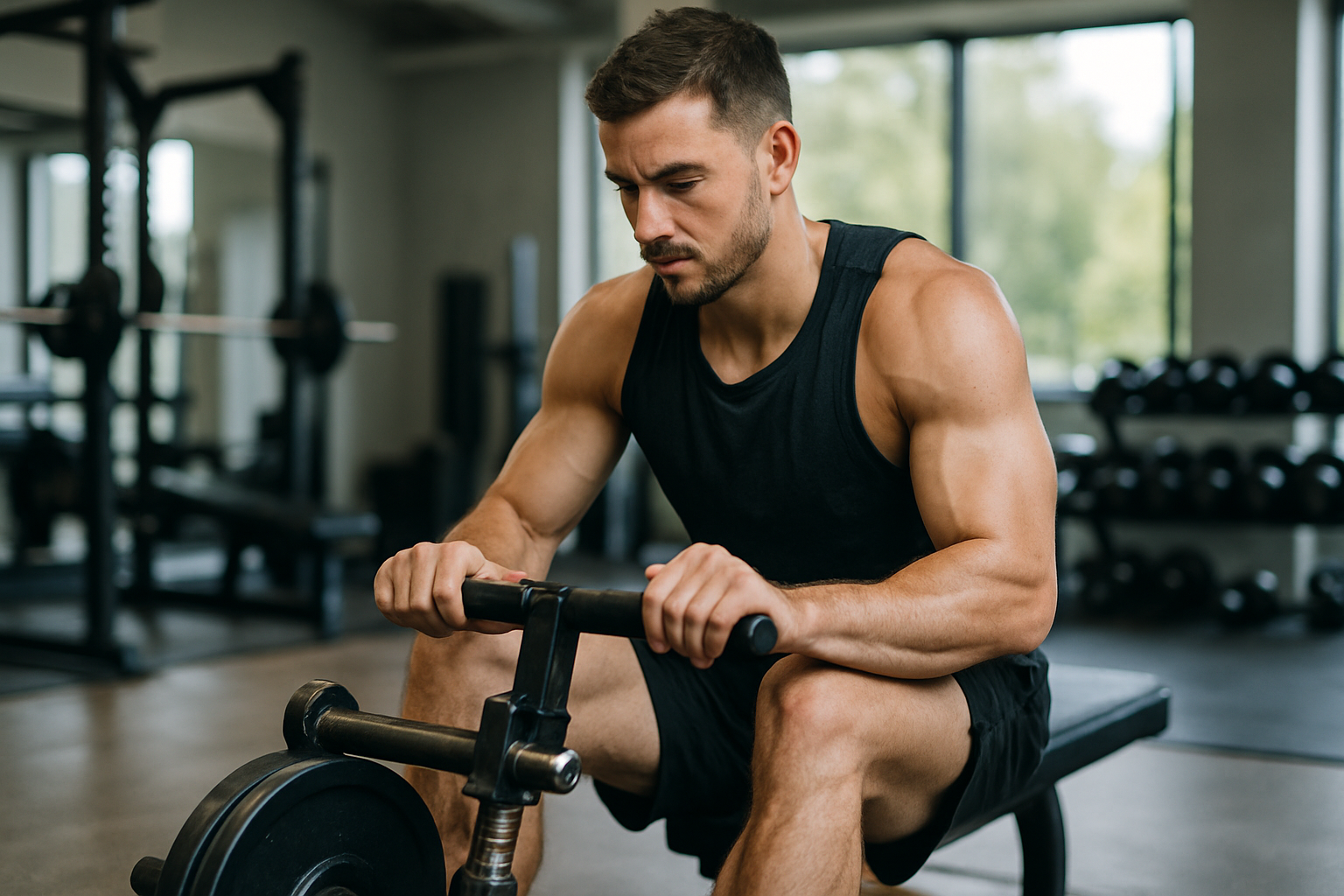
To perform a Seated Calf Raise, sit on a bench or chair with your feet flat on the floor. Position a weight (like dumbbells) on your knees, raise your heels off the ground by pressing through the balls of your feet, pause briefly at the top, and then lower your heels back down under control.
How to Do It
- Position Yourself: Sit on a bench or sturdy chair with your back straight and feet flat on the floor.
- Prepare the Weights: Hold a dumbbell in each hand and place them on your knees to add resistance.
- Feet Placement: Ensure your feet are shoulder-width apart, with the balls of your feet on the edge of the platform, if available.
- Raise Your Heels: Slowly lift your heels off the ground, pressing through the balls of your feet. Keep your knees stationary.
- Pause: Hold the top position for a moment, feeling the contraction in your calves.
- Lower Under Control: Gradually lower your heels back down to the starting position, ensuring you do not drop them.
- Repeat: Perform 15-20 repetitions for 3 sets, maintaining a controlled tempo throughout the exercise.
Muscles Worked
The Seated Calf Raise primarily targets the soleus muscle, a key muscle in the calf that is essential for ankle stability and movement. Additionally, it works the gastrocnemius muscle, which is involved in overall calf development and strength. This exercise is excellent for improving calf endurance and strength, contributing to better performance in activities that require lower leg strength.
Common Mistakes
-
Mistake: Lifting Too Quickly
Fix: Focus on a controlled tempo. Lift and lower your heels slowly to maximize muscle engagement and prevent injury. -
Mistake: Not Using Full Range of Motion
Fix: Ensure you raise your heels as high as possible and lower them fully to engage the calf muscles effectively.
Related: Standing Calf Raise
- Mistake: Letting the Knees Move
Fix: Keep your knees stationary throughout the movement. Only your heels should move to maintain proper form and isolate the calves.
Progression/Variation
- Beginner: Perform the Seated Calf Raise without weights to master the movement. Focus on form and range of motion before adding resistance.
- Intermediate: Add light dumbbells to increase resistance while maintaining proper form. Aim for 3 sets of 15-20 reps.
- Advanced: Use heavier weights or try single-leg seated calf raises, which will challenge your balance and strength. Perform 3 sets of 10-15 reps on each leg.
When to Avoid It / See a Clinician
If you experience pain in your calves, ankles, or knees while performing the Seated Calf Raise, it may be wise to stop the exercise. Additionally, if you have a history of calf strains, Achilles tendonitis, or other lower leg injuries, consult a clinician before attempting this exercise. LegLike can assist you in creating a tailored program that complements your rehabilitation needs, but it does not replace professional medical advice.
For beginners, aim for 3 sets of 15-20 repetitions at a controlled tempo, focusing on the quality of each movement.
Want this exercise programmed into a full plan for you? Try LegLike — AI-guided lower-body workouts, mobility assessment and rehab plans.
Frequently asked questions
What is the purpose of the Seated Calf Raise?+
The Seated Calf Raise primarily strengthens the soleus muscle in the calf, which is important for ankle stability and overall lower body strength.
Can I do this exercise without weights?+
Yes, beginners can perform the Seated Calf Raise without weights to master the form before adding resistance. This helps ensure you develop the proper technique.
How often should I include calf raises in my workout?+
Including calf raises 2-3 times per week can help build strength and endurance in the calves. Make sure to allow for recovery between sessions.
What should I do if I feel pain while doing the exercise?+
If you experience pain during the Seated Calf Raise, stop the exercise immediately. Consult a clinician to assess any underlying issues before continuing.
Program this exercise into a full plan
Personalized lower-body strength, mobility and rehab plans, powered by AI. Free to start.
Get Started Free